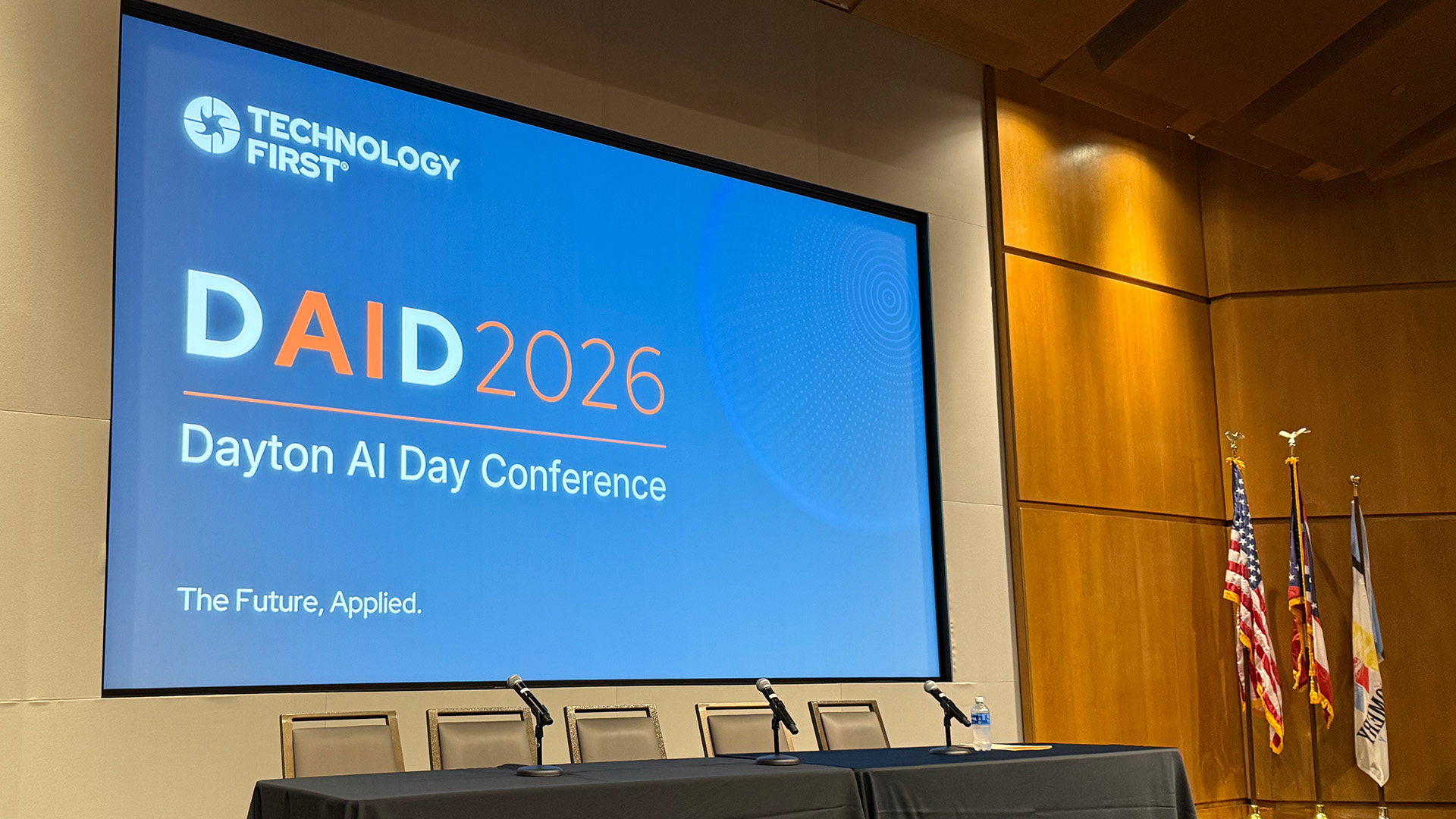
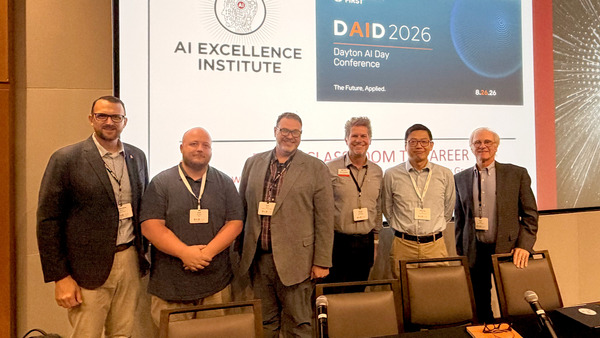
I participated in a panel convened by Chris Prokes, Director of the AI Excellence Institute at Sinclair Community College, for the Dayton AI Day Conference, organized by Technology First. The session was a rich opportunity to share how the University of Dayton, Sinclair Community College, Wright State University, and Cedarville University approach teaching and learning with AI, and to share how we at Miami University are doing this work. Chris’s questions below sparked rich discoveries.
- When you hear the phrase “AI-ready graduate,” what does that mean at your institution?
- What is one concrete example of how your institution is helping students build AI literacy right now?
- How are you helping students move beyond simply using AI tools toward using them with judgment, accuracy, ethics, and professional responsibility?
- Where are you seeing the most natural fit for AI in student learning: general education, specific majors, career preparation, student support, or somewhere else?
- What are faculty struggling with most as they adapt to AI, and what kinds of support or professional development seem to be working?
- How are your institutions addressing academic integrity while still encouraging students to learn how to use AI appropriately?
- What are you hearing from employers about the AI skills or habits they expect from new graduates?
- Looking across the Southwest Ohio region, what is one thing higher education institutions could do together to better prepare students for an AI-enabled workforce?
Takeaways
Fostering graduates’ critical thinking skills and adaptability were significant throughlines during the session—participants shared that AI literacy is crucial for graduates to determine when to use AI and when not to, and to assess its outputs for reliable results. Some faculty at participating institutions are facilitating this through custom AI tools that they built to supplement in-person teaching. Participants shared that relationships between instructors and students cannot be replaced by AI tools. AI can supplement learning in some exciting ways, but human interaction can produce significant learning gains.
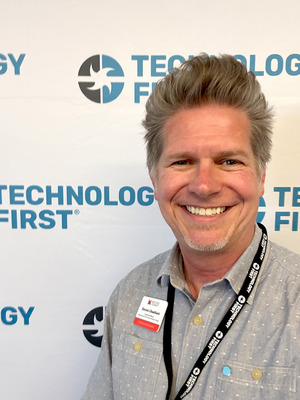
We all agreed that transparency when using AI is a must, whether in teaching and learning or in the workplace. Each institution also empowers faculty to set their own AI policies to tailor acceptable use to each course’s goals. I was particularly interested in the idea that faculty at some institutions are developing a base of departmental AI policies to reduce wide variance across courses that can often be very frustrating for students to navigate. All institutions shared that they have integrated modules, courses, or components that introduce students to AI tools and ethical AI use. During the session, I was excited to share more about Miami’s AI in the Majors initiative, where faculty in each department are integrating AI into one of their degree programs’ learning outcomes (props, Miami!).
I look forward to more opportunities to learn with institutions in our region as we navigate teaching and learning with AI and how to prepare graduates for success. It’s a constantly shifting landscape—but that’s what makes this work exhilarating!